

Fire Pit Installation in Houston, TX
From simple wood-burning rings to plumbed natural-gas centerpieces wrapped in cut limestone, Saul's Home Improvement has designed and installed outdoor fire features for Houston yards since 2015. Every pit is code-compliant, HOA-approved, and wrapped in materials built for Gulf Coast weather.
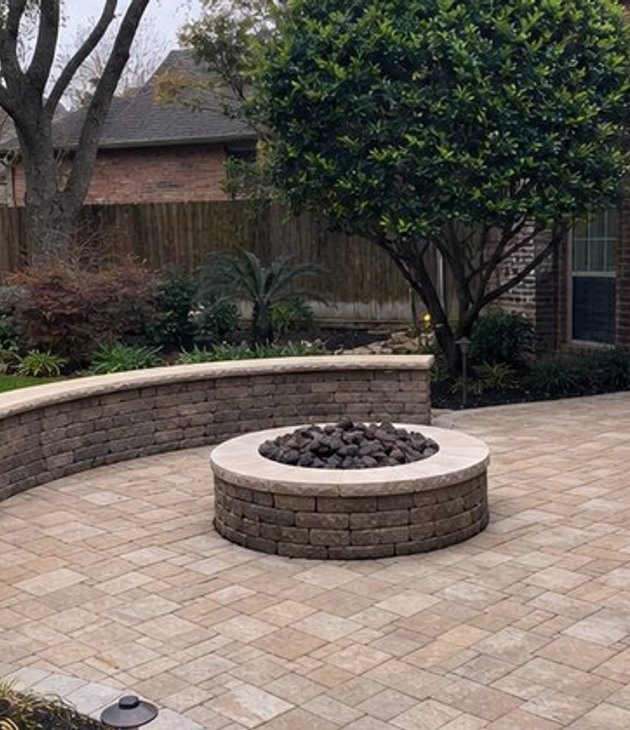


We build fire pits Houston families gather around
Houston winters are mild, but they come with crisp 40-degree nights that are perfect for a fire pit. A well-built pit turns an ordinary patio into a gathering spot that works from late October through March. Done right, it is the single most-used feature in the backyard.
Our pits are built to last. Wood-burning designs use fire brick liners rated for 2,000 degrees, set inside a veneer of natural stone or manufactured stone block. Gas-fueled pits get a stainless-steel burner pan, volcanic rock or fire glass filler, and a buried natural-gas line installed to city code with a keyed valve at the patio edge. Every install is permitted when required and documented for resale disclosure.
- Licensed plumber on staff for every natural-gas install
- Fire brick liners rated for continuous high-heat use
- HOA-ready renderings and site plans for Sugar Land, Katy, and Cinco Ranch
Here are the fire pit styles we build
Fuel choice drives every other decision on the pit. Here is how the three main options stack up for Houston yards.
- 01
Wood-Burning
The classic. Cut stone or manufactured block wrapping a fire brick liner with a 36 to 48-inch opening. No fuel line, no permit, full campfire experience. Great for larger lots in Cypress, Kingwood, and Tomball.
- 02
Natural Gas
Plumbed to the home's gas meter with a 3/4-inch black-iron line and a keyed valve. Push-button or key-start ignition, smokeless, and consistent flame height. The most popular choice in HOA-governed Sugar Land and Katy.
- 03
Propane
Perfect when there is no gas line at the property or when you want the pit moveable. 20-pound tank hidden in a masonry vault, quick-connect hose, and adjustable flame control.
- 04
Linear Fire Tables
Dining-height or coffee-height rectangular fire features with a glass wind screen. Pairs with sectional furniture for a modern look. Best on contemporary homes in the Heights and Midtown.
How do permits, code, and safety affect Houston fire pits?
City of Houston Rules
Permanent natural-gas fire pits require a plumbing permit with a pressure test of the new line. Portable propane pits do not need a permit. Wood-burning pits must sit 10 feet from any structure or combustible overhang.
HOA Approvals
Most master-planned suburbs require an architectural review for a permanent pit. We prepare the submission with material samples, a site plan, and a written safety plan. Approval usually runs 2 to 4 weeks.
Burn Bans
Harris County calls a burn ban in most summers once drought conditions trigger. Wood-burning pits are off-limits during a ban. Natural gas and propane pits stay legal because the fuel supply is shut off with a valve.
Clearance Zones
We set every pit a minimum of 10 feet from structures, 5 feet from planted shrubs, and 25 feet from wood fences. Seating is positioned 4 to 6 feet from the outer face for comfortable use and safe entry-exit.
Emergency Shutoff
Gas pits install with a keyed emergency shutoff at the patio edge, clear of the flame zone. We label the shutoff, place a fire extinguisher sign, and walk every homeowner through lighting and shutdown before turnover.
Why Houston Trusts Saul's for Fire Features
Licensed Plumber On Staff
No subcontracting your gas line to the cheapest bidder.
Warrick-Tested Burner Kits
CSA-listed burner and plate assemblies, never salvage parts.
Fire-Rated Construction
Fire brick liner, cementitious refractory mortar, and zero combustible interiors.
Here is how our fire pit build process works
Wood-burning pits install in 2 to 3 days. Gas pits take 4 to 7 days with permit and inspection.
- 01
Site & Style
We walk the yard with you, confirm clearances, and show stone samples. Gas pits get a gas-route sketch then and there.
- 02
Permit & HOA
We pull the permit and file the HOA form. Nothing breaks ground until both are approved.
- 03
Build & Plumb
Concrete footer, fire brick liner, stone veneer, burner assembly, and buried gas line. Pressure test with soap bubbles and a gauge.
- 04
First-Light & Training
City inspection (when required), first flame ceremony with the owner, and a care guide for stone, burner, and media.
We install fire pits across Greater Houston
Crews dispatched daily from Harris, Fort Bend, and Montgomery counties.
Questions homeowners ask about fire pits
Gas, propane, or wood for Houston?
Natural gas is the easiest to live with if the house has a gas meter. No wood to store, no ash to clean, no burn-ban worries. Propane is the best fit when a gas line is too far or too costly to run. Wood-burning gives the campfire smell and crackle but is off-limits during county burn bans.
How close can a fire pit be to my house?
10 feet from any structure or combustible overhang is the City of Houston code minimum. Covered patios need a 10-foot clearance in every direction from any open flame. We usually set pits 12 to 15 feet out for comfort.
Can you add a fire pit to my existing patio?
Yes. We drill a 4-inch core through the existing slab for the gas line (if going gas), set the pit footer directly on the slab, and build up from there. Pavers can be cut around the new footprint without tearing out the full patio. Most retrofits finish in 3 to 5 days.
Is it safe to use a gas fire pit under a pergola?
Only with at least 10 feet of clearance from any overhead structure and proper ventilation. Pergolas with solid roofs need a CSA-approved direct-vent fireplace instead. Open-slat pergolas usually work. We check the geometry and review with the homeowner before committing.
What goes in the pit besides the flame?
Gas pits get either tumbled lava rock, polished fire glass, or ceramic log sets. Fire glass in copper, amber, or black reflects the flame and looks spectacular at night. Lava rock is the budget default. Log sets read as wood-burning from a distance and work great in traditional homes.
Does a fire pit raise my home insurance?
Rarely. A code-compliant permanent fire pit is treated like any other yard feature by most carriers. Portable propane units and uninstalled chimineas sometimes require notification. We provide a permit and final-inspection record for your insurance file.
Can the fire pit double as a grill?
Wood-burning pits can add a swivel grill arm for open-fire cooking. Gas pits are not built for cooking because the media will absorb food grease. If you want a full cookout setup, we recommend a separate built-in grill next to the pit.


