

Xeriscaping in Houston, TX
Cut your water bill, lose the weekend mowing, and still end up with a yard you want to show off. Saul's Home Improvement designs and installs xeriscape landscapes with Texas natives, adapted ornamentals, and smart irrigation tuned for Gulf Coast rainfall.
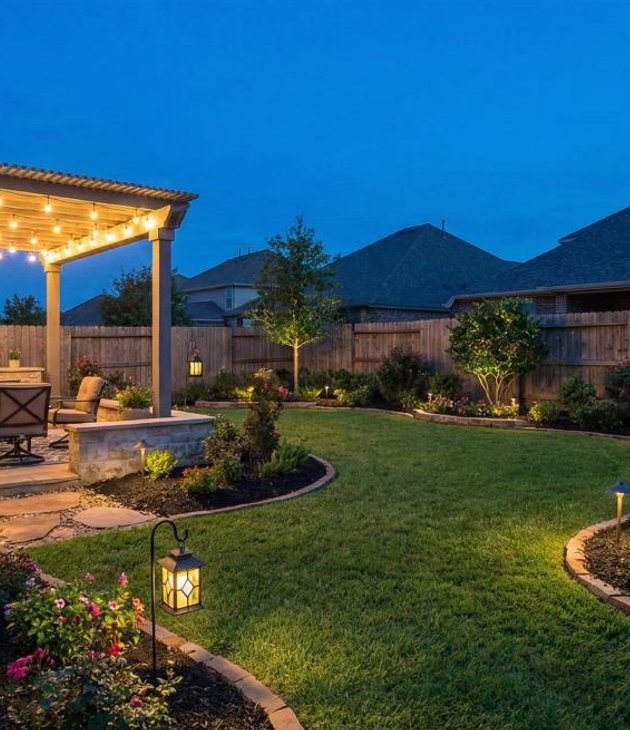


Our Houston xeriscape designs work with the Gulf Coast, not against it
Xeriscaping is not rocks and cactus. It is a smart-design approach that uses the right plant in the right place with the right amount of water. In Houston, that means working with our 50 inches of annual rainfall, clay soil moisture, and brutal July-August heat to build a landscape that thrives on a fraction of the irrigation a St. Augustine lawn demands.
A well-designed Houston xeriscape cuts outdoor water use by 50 to 70 percent, eliminates 80 percent of the mowing, and puts food on the table for pollinators that keep our gardens healthy. We lean heavily on Texas natives, Gulf Coast adapted cultivars, and permeable hardscape, tied together with a smart drip-irrigation controller that dials watering to soil moisture and rain data.
- Native-focused plant palette that handles 100-degree summers
- Rachio or Hunter smart controllers tied to live Houston weather data
- Decomposed granite, crushed limestone, and pea-gravel groundcover options
Which drought-tolerant plants work in Houston?
These are the workhorses we plant most in Greater Houston xeriscapes. Every one is proven to handle our clay, heat, and erratic rain.
- 01
Native Grasses
Gulf muhly, little bluestem, Lindheimer muhly, and Mexican feather grass. Big textural impact, drop dead easy to care for, and gorgeous when backlit by late-day sun.
- 02
Shrubs & Accents
Texas sage, rosemary, dwarf yaupon holly, pride of Barbados, esperanza, and Mexican bush sage. Reliable bloomers that laugh at drought once established.
- 03
Perennials
Salvia greggii, lantana, Mexican bush sage, black-eyed Susan, gaillardia (Indian blanket), and purple coneflower. Four seasons of color with deep roots that tap water below the clay layer.
- 04
Succulents & Agaves
Whale's tongue agave, Gulf Coast yucca, sotol, and prickly pear. Architectural forms that need almost no water and survive our worst summer.
- 05
Small Trees
Texas redbud, Mexican plum, vitex (chaste tree), desert willow, and yaupon tree form. Shade, flowers, and wildlife value without the water demand of live oaks.
- 06
Groundcovers
Silver ponyfoot, creeping thyme, Asian jasmine (in shade), and wooly stemodia. These fill gaps between stones and smother weeds once rooted.
What does xeriscaping save you?
Water Bill Savings
A typical 6,000 sq ft Houston lawn consumes 60,000 to 90,000 gallons of irrigation a year. A mature xeriscape of the same size uses 15,000 to 25,000 gallons. At current City of Houston tiered rates, that saves the average household $400 to $900 annually.
Time Savings
Native-heavy plantings need pruning twice a year and almost no mowing. Expect 70 to 85 percent less yard-maintenance labor versus a traditional turf and mulch landscape. That is weekends back.
Drought Restriction Proof
The City of Houston moves to Stage 1 and Stage 2 drought restrictions every few summers. Xeriscape beds barely notice. Your neighbors watching their lawns go yellow notice more.
Pollinator & Wildlife Gains
Native grasses and flowers support monarchs during their spring Gulf Coast migration, keep hummingbirds fed all summer, and bring back the songbirds that thinned out in chemical-heavy traditional yards.
Why Houston Picks Saul's for Xeriscape
Texas Native Plant Experience
Our team sources from local native nurseries, not Sun Belt big-box stock.
Clay-Soil Amendment
We fix bed drainage with expanded shale and compost before a single plant goes in.
One-Year Establishment
Plants that do not take in year one get replaced on our dime.
Here is how our xeriscape build process works
A 1,500 sq ft xeriscape conversion typically finishes in 10 to 14 working days.
- 01
Site Analysis
Sun exposure map, slope check, existing irrigation audit, and a soil infiltration test to see how fast water moves through your clay.
- 02
Plant Plan
Zone-grouped plant list with species, size, spacing, and mature dimensions. We map watering zones by similar water demand so irrigation can run efficiently.
- 03
Install
Turf removed, soil amended with expanded shale and compost, drip irrigation laid, plants installed, decomposed granite or mulch dressed in.
- 04
Program & Care Plan
Smart controller programmed for Houston's seasonal ET rates, watering schedule documented, and a printed care guide for year one.
We install xeriscaping across Greater Houston
Crews dispatched daily from Harris, Fort Bend, and Montgomery counties.
Questions homeowners ask about xeriscaping
Is xeriscape just rocks and cactus?
Not even close. Gulf Coast xeriscapes look lush because we have 50 inches of annual rainfall to work with. Think flowering perennials, ornamental grasses, small flowering trees, and a small gravel path or dry creek bed. The goal is to use water efficiently, not to look like El Paso.
Will my HOA approve a xeriscape?
Texas Property Code Section 202.007 prohibits HOAs from blanket-banning xeriscaping and drought-tolerant landscaping. Most Greater Houston HOAs have adopted guidelines that accept planned conversions. We prepare a landscape plan, material samples, and plant list for submission. Approval usually runs 3 to 5 weeks.
How long before the yard looks established?
Expect a filled-in, natural look at the end of year two. Grasses fluff out by month 6, perennials double in size by month 12, and shrubs hit their mature footprint by month 18 to 24. The first summer is the slowest because plants are focused on putting down roots.
Do xeriscape plants handle our Harvey-level rain events?
The right plants do. That is why we specify Gulf Coast natives and adapted cultivars that evolved to survive both drought and flash flooding. We also build slight berms and swales that move excess water away from root crowns during heavy rain.
Do I still need irrigation?
Yes, but a much smaller system. We typically install drip emitters or micro-bubblers delivering water slowly at the root zone. A mature xeriscape runs 5 to 10 minutes per zone, once or twice a week during summer. That is maybe 15 percent of a lawn's water demand.
Will I lose curb appeal?
Quite the opposite. A thoughtful xeriscape is far more visually interesting than a flat green lawn. Appraisers increasingly credit native-plant landscapes with a 5 to 15 percent premium over standard turf on Greater Houston properties, especially in sustainability-minded zip codes.
Can you convert part of the yard first?
Absolutely. Many of our projects start with the front yard or a single side, then expand to the back in phase 2. We design the full master plan up front so every phase fits the long-term look.


