

Retaining Walls in Houston, TX
Structural retaining walls that hold back slopes, stop erosion, and open up usable yard footprint on sloping Kingwood, Clear Lake, and Hill Country lots. Every Saul's wall is drainage-engineered, geogrid-reinforced on taller runs, and backed by a 5-year workmanship warranty.
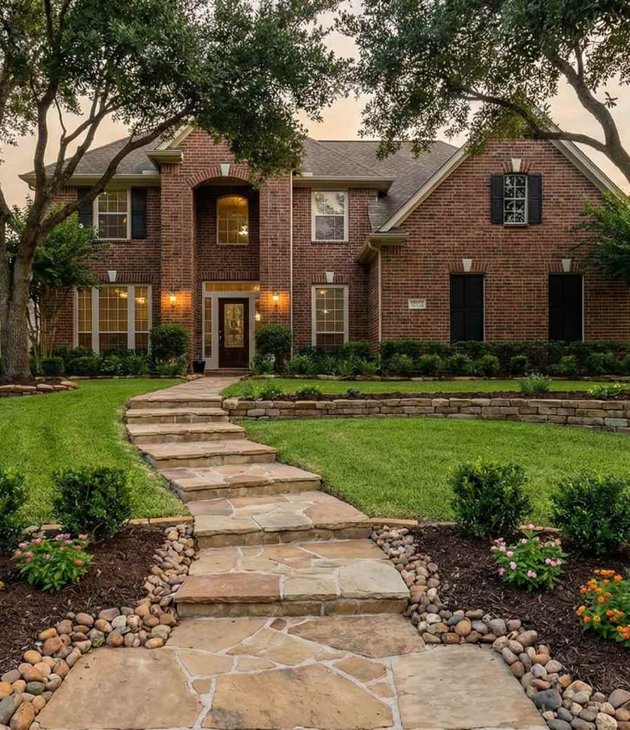


We engineer every retaining wall lift in Houston
A retaining wall is not a landscape feature. It is a structural element holding back thousands of pounds of saturated clay. When Houston gets a 4-inch tropical rain, the dry weight doubles and the lateral pressure behind the wall can quadruple. Walls that fail almost always fail for the same reasons: no drainage, no geogrid, or the base course sitting on bare clay instead of crushed stone.
Every Saul's wall is engineered before the first block is cut. We pull soil type, run a preliminary calculation on active earth pressure, size the geogrid lengths, and design a drainage chimney behind the wall. Walls over 4 feet tall get a stamped engineering letter from our third-party PE firm, which is required by most Harris County inspection offices.
- PE-stamped plans included for walls over 4 feet
- 4-inch perforated drain tile behind every wall, wrapped in 3/4-inch washed stone
- Mirafi geogrid reinforcement at every 2 feet of height
Here are the retaining wall types we build
Choosing the right wall comes down to height, load, look, and site access. Here are the four systems we pour and set across the metro.
- 01
Segmental Retaining Walls (SRW)
Versa-Lok, Belgard Diamond Pro, or Keystone blocks interlocked dry-stacked. The most common wall we build. Cost-effective up to 10 feet with geogrid, and repairs are straightforward if a block ever cracks.
- 02
Natural Stone
Texas limestone, Oklahoma chopped stone, or moss rock dry-laid or mortared. The premium look for Memorial and River Oaks. More labor but unmatched character.
- 03
Poured Concrete
Site-cast reinforced concrete with a footer tied into the wall. The strongest option for heavy loads, long runs, or walls holding back driveway fill. Can be stamped, stained, or veneered to match house finishes.
- 04
Timber Wall
Pressure-treated 6x6 or 8x8 timbers tied back with rebar deadmen. The budget pick for walls under 4 feet on informal back-lot terracing. Expect a 15 to 20 year service life in Gulf Coast humidity.
We engineer drainage into every retaining wall
Soil Evaluation
Our first step is checking subgrade. Houston soil ranges from Beaumont clay in the East End to sandier loam up in The Woodlands. Each type needs a different footer width and compaction target to avoid settlement.
Geogrid Layout
We pull geogrid lengths equal to 60 to 70 percent of wall height at 2-foot vertical spacing. For a 6-foot SRW, that is four layers of Mirafi Miragrid extending 4 feet back into the hillside, tying the block face to the compacted fill.
Drainage Chimney
Directly behind the wall face we build a 12-inch-thick column of 3/4-inch washed drain rock. Water moves through the rock, down to a perforated 4-inch pipe at the base, and exits through daylight drains or a catch basin tied into the storm system.
Cap & Sealing
Every wall gets a concrete or stone cap glued on with polyurethane construction adhesive. The cap sheds rainwater off the top of the wall instead of letting it soak into the joints.
Why Our Walls Don't Bulge or Lean
Third-Party PE Engineering
Stamped drawings for any wall over 4 feet, required by Harris County code.
NCMA-Trained Installers
Our foremen hold National Concrete Masonry Association certs.
Always-Drained Backfill
We never use native clay as backfill behind a wall.
Here is how our retaining wall build process works
Expect 5 to 15 working days for most walls under 50 feet long.
- 01
Survey & Design
Elevation survey, design drawing, engineering letter, and a scope statement that spells out block, cap, drainage, and backfill specs.
- 02
Excavate Footer
Trench dug to 12 to 18 inches below grade, 24 inches wide for a typical SRW. Subgrade compacted and leveled.
- 03
Build & Reinforce
Base course leveled to 1/8 inch, blocks set, geogrid layered into fills, drain tile run at the base.
- 04
Cap & Restore
Caps glued, topsoil and sod replaced behind the wall, and a final wash-down before the site is turned back over.
We build retaining walls across Greater Houston
Crews dispatched daily from Harris, Fort Bend, and Montgomery counties.
Questions homeowners ask about retaining walls
Do I need a permit for a retaining wall?
The City of Houston requires a permit with engineered drawings for any wall over 4 feet measured from the bottom of the footer. Unincorporated Harris County is similar. Walls under 4 feet do not usually need a permit but still need to be set back from the property line and any easement. We pull the paperwork.
How long does a retaining wall last?
A properly built segmental block or stone wall lasts 50 to 100 years. Timber walls last 15 to 20. Poured concrete lasts the life of the structure unless the rebar corrodes. The critical variable is drainage. A well-drained wall can be built once and forgotten.
Why is my existing wall leaning?
Almost always because the original builder skipped drainage. Saturated clay behind the wall doubles in weight and pushes the blocks outward. Less often it is a footer problem or a missed geogrid layer. We can usually diagnose from a few photos and a site visit.
Can you stack walls in tiers?
Tiered walls work great on sloping Kingwood and Clear Lake lots. The rule is that each tier must sit back from the one below by twice the height of the lower wall. Engineering treats tiers either as independent walls or as one bigger wall depending on setback, which changes footer and geogrid specs.
Will a retaining wall stop erosion on my slope?
Yes, and it is often the only practical fix for severe erosion. We pair the wall with catch basins or French drains at the top to intercept surface runoff, then the wall itself holds back the remaining soil. Pair that with the right groundcover and the erosion usually stops for good.
Can I plant above the wall?
Yes, but keep root systems modest. Shallow-rooted perennials, grasses, and groundcovers are ideal. Avoid planting large trees within 10 feet of the wall because root growth can push blocks outward and tree taproots can crack geogrid. We include a planting plan in our design.
What about walls near my pool or patio?
Walls that double as patio edges or pool deck perimeters are very common on Memorial and Bellaire lots. We coordinate construction sequence with the pool contractor so the wall goes in before the deck. That keeps the patio surface flat and protects the pool shell from backfill pressure.


